Many of the modern architects get criticized for wasteful use of materials and unnecessary extravagance in shape and space management. After closely studying the Flatz House by Baumschlager & Eberle, I came to realise that there are often logical and complex reasons for such extravagance. The Flatz House appears quite uninviting and hostile at first glance, with its cantilevers, rotated floors and unfinished concrete exterior, but after having studied it on spacial and structural and practical level, it perfectly fulfills the clients needs and requirements.
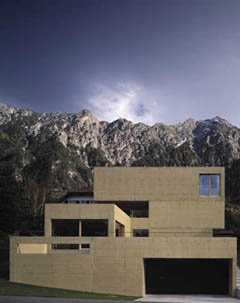
Its clean-cut, angular and minimalistic style ideally suits the profession of the client, a doctor, and as the house incorporates his office, it provides a professional, calm environment for the patients. The spaces themselves are also very functional, despite the curious shape of the Flatz House. The basement, partially hidden underground, contains a guest apartment, which can be accessed both from the open space living are situated on the ground floor and the outside. The two following floors are significantly smaller in size and contain badrooms. The arechitects' clever use of the counterlever separates the private space of the parents from this of the children, who have a separate floor to themselves.

Overall, the design of the Flatz House, questioned by many to be fanciful and extravagant, is actually very functional and suits the client perfectly, which is the main aim of the project.


